
Traveling with Children: Consent & Custody Rules
Why you need more than just a passport when traveling internationally or relocating with a child.
For divorced or separated parents, booking a flight is the easy part. The hard part is ensuring you have the legal right to take your child on that plane. Whether you are planning a vacation abroad or a move to a neighboring state, failing to get the proper consent can turn a family trip into an accusation of custodial interference or abduction.
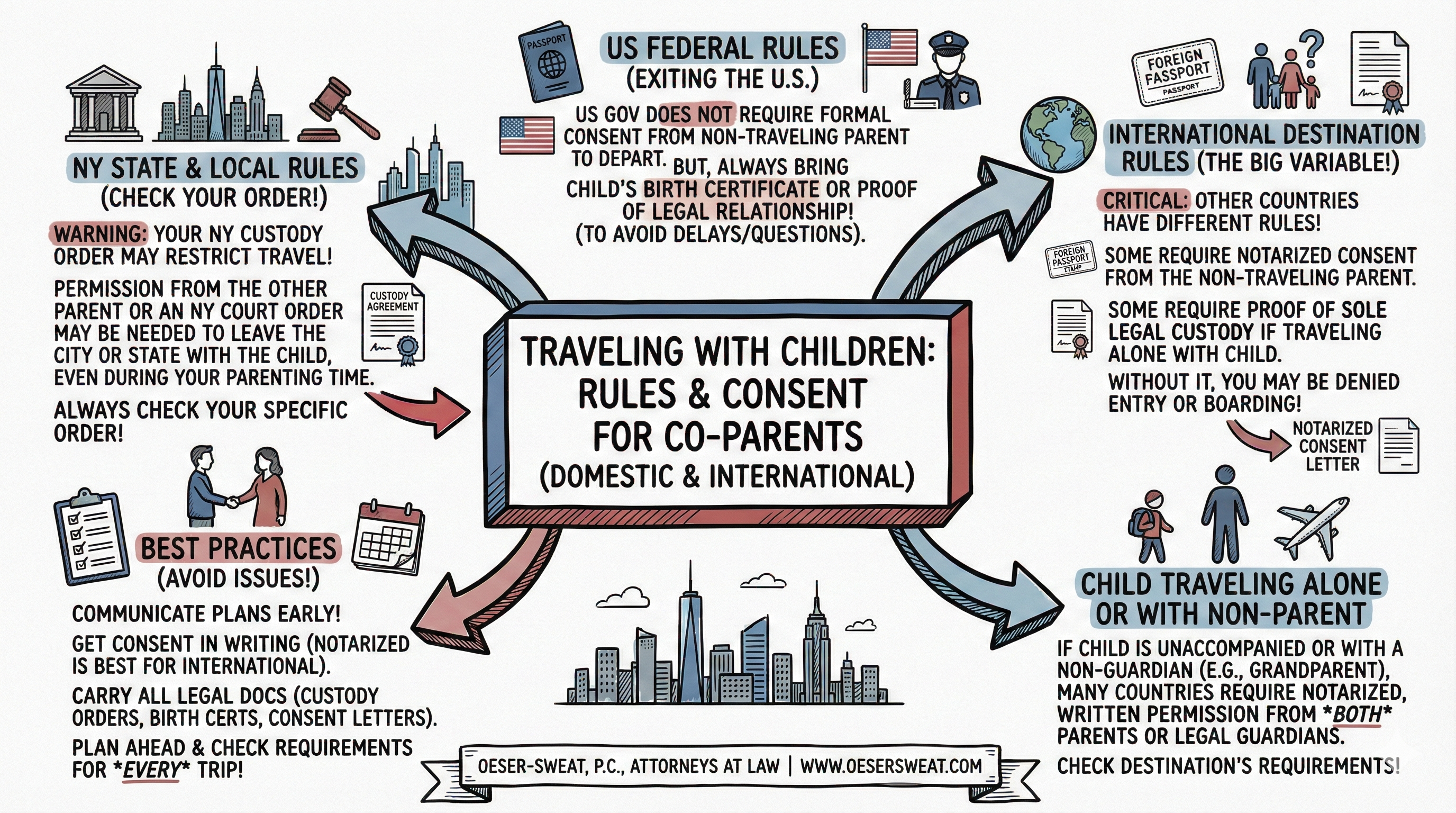
View Text Description of Graphic
Travel Requirements: The graphic highlights that while the U.S. government doesn’t always demand exit consent, destination countries often require proof of permission.
Documents Needed: Valid Passport, Copy of Birth Certificate (to prove relationship), and a Notarized Consent Letter from the non-traveling parent.
Special Circumstances: If you have sole custody, bring the court order. If the other parent is deceased, bring the death certificate.
Warning: Traveling without these documents can lead to being denied entry or detained at the border.
1. The “Permission Slip” Rule: Notarized Consent
The United States does not generally require you to show a permission letter to leave the country. However, many foreign countries (like Canada, Mexico, and nations in the EU) require strict proof that the traveling parent has permission from the non-traveling parent to cross their borders with a minor.
The Solution: If you share custody, or even if there is no formal order but the other parent is on the birth certificate, you should carry a Notarized Travel Consent Letter. This document should state:
- Who the child is traveling with;
- The specific dates of travel;
- The contact information for the non-traveling parent; and
- That the non-traveling parent explicitly consents to the trip.
Without this, border agents have the discretion to stop you, fearing international child abduction.
2. Getting a Passport: The Two-Parent Rule
Before you can even travel, you need a passport. Under federal law, for children under 16, both parents must authorize the issuance of the passport. This usually means both parents must appear in person at the passport agency.
If the other parent cannot or will not appear, you must provide a notarized Form DS-3053 (Statement of Consent) along with a copy of their ID. If you have sole legal custody and the other parent has no rights, you must provide the court order proving this status.
3. Relocation: The “Close Move” Trap
Many parents in NYC assume they can move to a nearby suburb in New Jersey or Westchester without permission because “it’s only 45 minutes away.” This is incorrect. Taking a child across state lines to live, or moving them a distance that disrupts the other parent’s visitation schedule, often requires either:
- Written permission from the other parent; or
- A Court Order granting permission to relocate.
If you move without these, the court can order the child returned immediately to New York City, and you could face sanctions for custodial interference.
4. How We Can Help
At Oeser-Sweat, P.C., we assist parents on both sides of this issue. We can:
- Draft Travel Agreements: Creating robust consent letters and stipulations that satisfy border authorities.
- Seek Court Permission: If your ex-spouse unreasonably refuses to sign a passport application or consent to a vacation, we can file a motion asking the judge to grant permission.
- Litigate Relocation: If you need to move for a job or family support, we can petition the court to show why the move is in the child’s best interest.