
How to Get an Uncontested Divorce in NY
Navigating the paperwork, venue rules, and settlement process without a trial.
Many people believe that an “Uncontested Divorce” means a divorce where you and your spouse agree on everything from day one. In legal reality, almost every divorce starts as “semi-contested.” It only becomes truly uncontested when you sign the final settlement papers and submit them to the clerk.
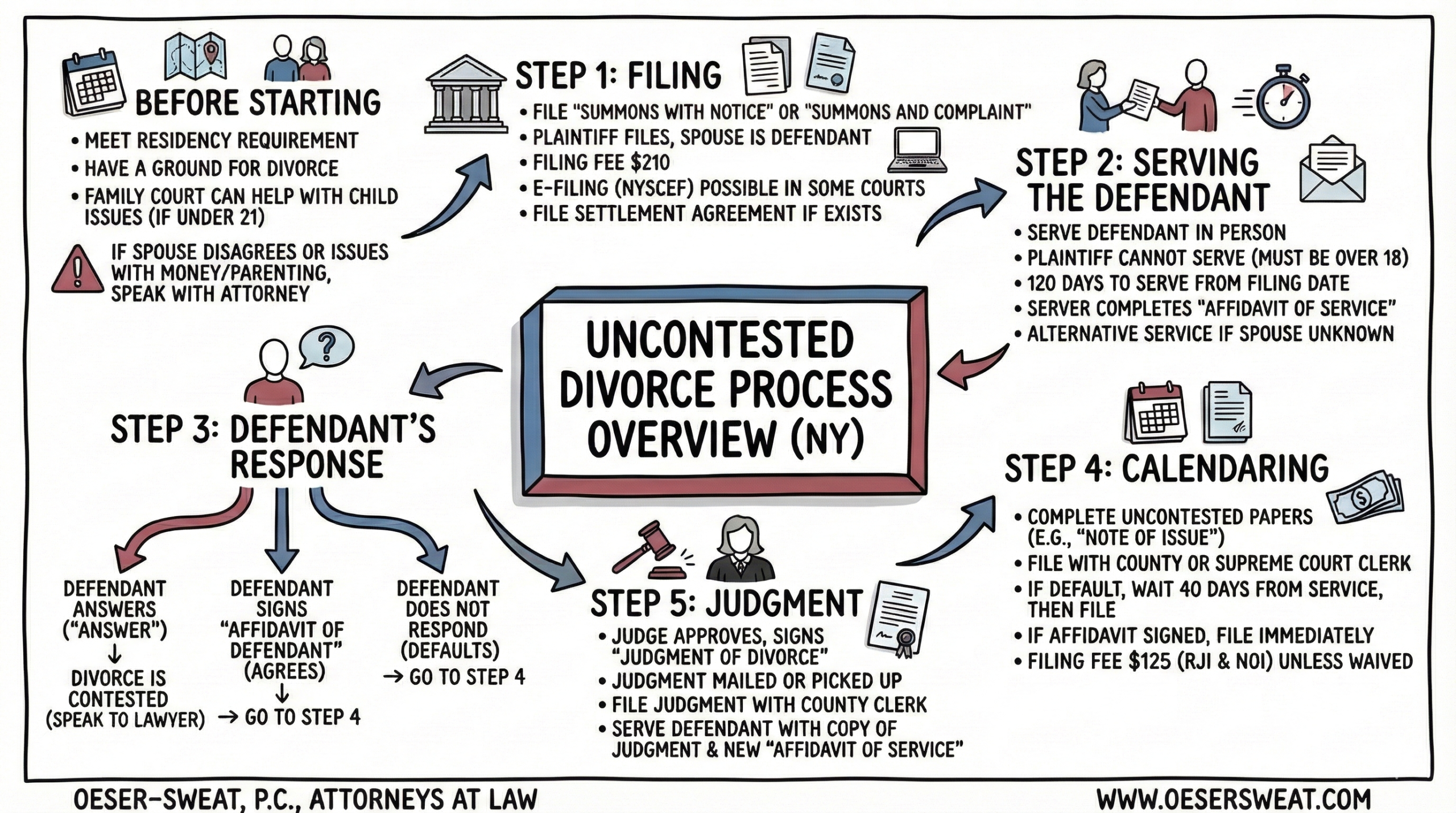
View Text Description of Figure 1
1. Purchase Index Number: File Summons with Notice or Summons and Complaint.
2. Service of Process: Personally serve the defendant within 120 days.
3. Defendant Defaults or Consents: The Defendant signs an “Affidavit of Defendant” agreeing to the divorce, or fails to respond.
4. Note of Issue: File papers to place the case on the calendar (if necessary).
5. Submission of Packet: Submit Findings of Fact, Conclusions of Law, and Judgment.
6. Judgment Signed: The Judge or Referee signs the final decree.
1. Filing the Case: The Venue Rule (CPLR 515)
Before you even fill out a form, you must know where to file. As of early 2025, the new CPLR § 515 mandates that you file for divorce in a county where at least one of the parties or their minor children resides. You can no longer pick a distant “rocket docket” county just because it processes papers faster. If you live in Queens, you file in Queens.
2. Is It Really Uncontested? The “Notice of No Necessity”
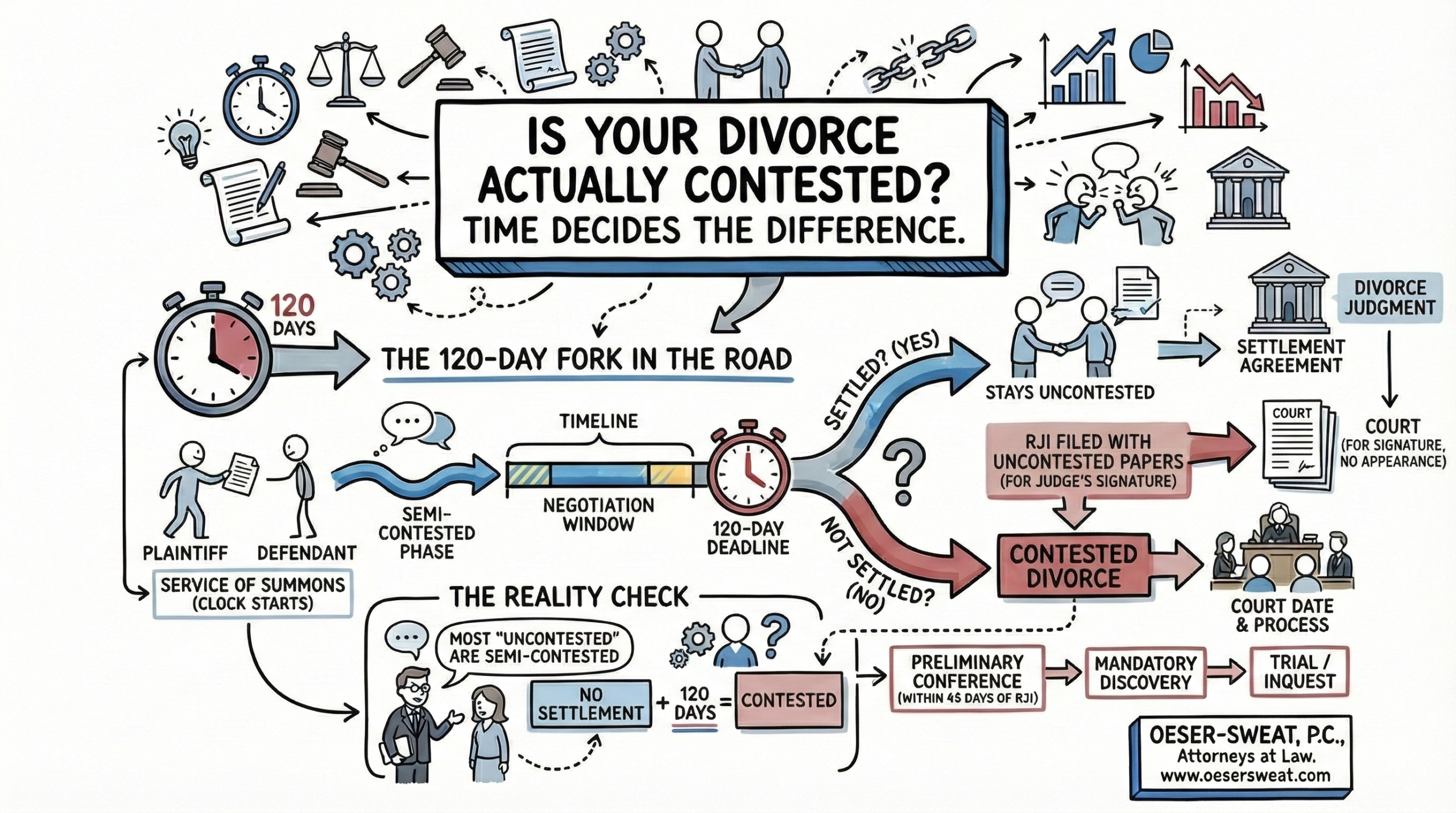
Technically, every divorce is “contested” until it is settled. However, the court gives you a window of opportunity to work things out.
After the Summons is served, if you and your spouse believe you can settle without judicial intervention, you can file a document called a “Notice of No Necessity.” This extends the deadline to file a Request for Judicial Intervention (RJI) from 45 days to 120 days.
View Text Description of Figure 2
The Agreement Test: Do both parties agree on Custody? Support? Asset Division? If YES to all, it is Uncontested.
The Time Factor: Even if you agree, if you miss the deadlines or fail to sign the papers, the court treats it as contested to force movement.
The “No Necessity” Path: Using the 120-day window to finalize terms without seeing a judge.
3. The “Uncontested Packet”
If you reach a settlement, you don’t just tell the judge “we agree.” You must draft a massive stack of specific legal documents known as the “Uncontested Divorce Packet.” This replaces a trial. Instead of testifying on a witness stand, you provide “written testimony” through sworn affidavits.
Key Documents in the Packet:
- Affidavit of Plaintiff: Your sworn story stating the grounds for divorce and that you meet the residency requirements.
- Affidavit of Defendant: Your spouse’s sworn statement admitting service and consenting to the divorce (or waiving their right to answer).
- Findings of Fact & Conclusions of Law: A document you draft for the Judge to sign, summarizing the legal “facts” of the marriage and the “conclusions” (that you are entitled to a divorce).
- Judgment of Divorce: The final decree that legally ends the marriage.
If there are children under 21, you must also submit child support worksheets and specific language regarding custody and health insurance to ensure compliance with the Child Support Standards Act (CSSA).
4. Submission and Judgment
Once the packet is assembled, it is submitted to the Matrimonial Clerk’s office. A court attorney (referee) reviews every line to ensure it complies with the law. If there is a mistake—even a missing social security number or a math error in child support—the packet will be “defected” (rejected), and you will have to fix it. If approved, the Judge signs the Judgment, and you are officially divorced.