
Eviction Process Guide: Sale of Property & Holdover
A strategic roadmap for New York landlords preparing to sell property with existing tenancies.
Selling a residential property in New York is complicated when a tenant is in possession. Whether you are dealing with an expired lease or a month-to-month arrangement, terminating the tenancy correctly is the most critical step to ensuring a successful closing.
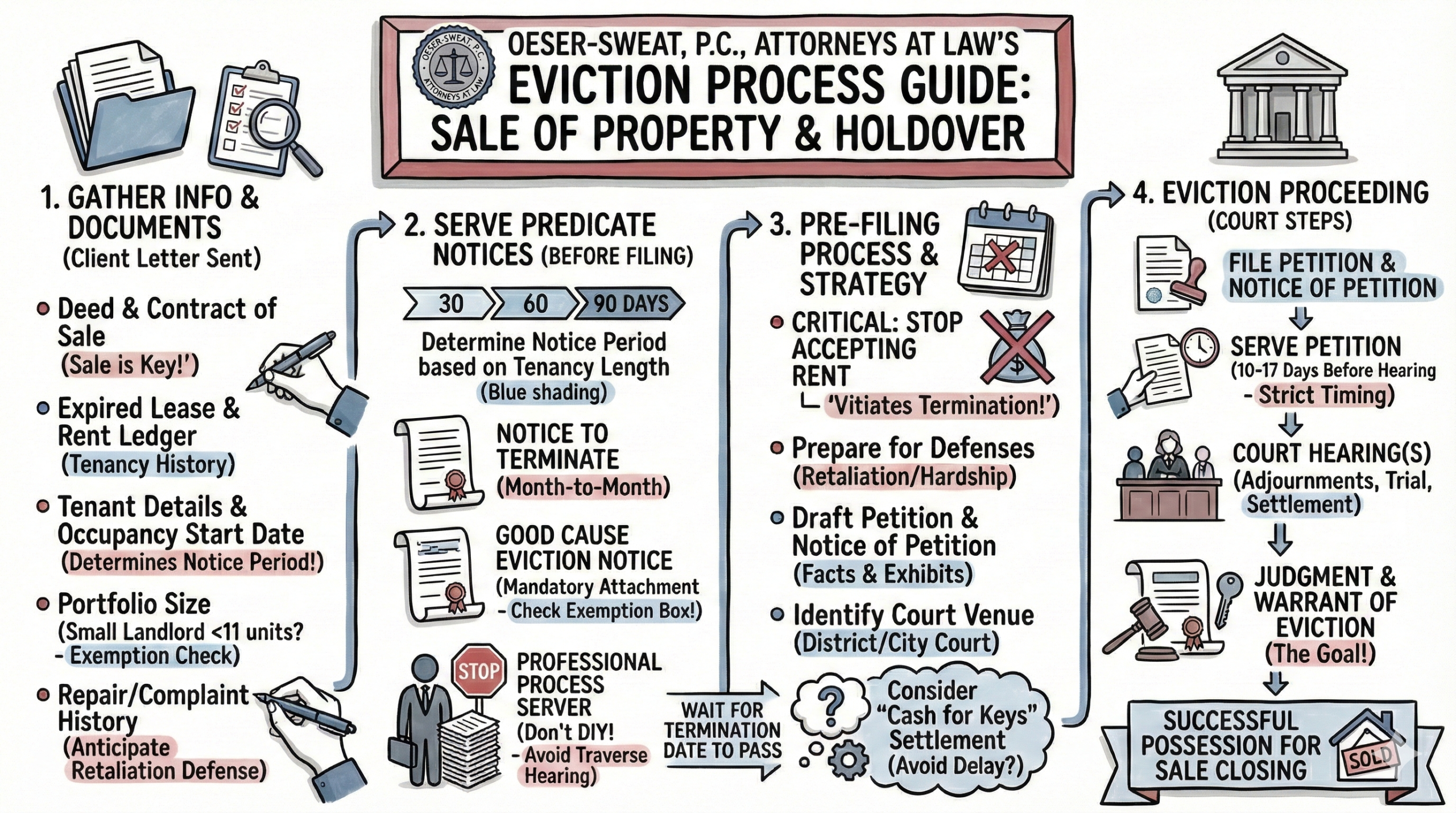
View Text Description of Eviction Roadmap
Step 1: Gather Info & Documents. Collect the Deed, Contract of Sale, expired leases, rent ledgers, and tenant occupancy start dates. Verify your portfolio size for Good Cause Eviction exemptions.
Step 2: Serve Predicate Notices. Determine the notice period (30, 60, or 90 days) based on the length of tenancy. Serve a Notice to Terminate and a Good Cause Eviction Notice via a professional process server.
Step 3: Pre-Filing Strategy. CRITICAL: Stop accepting rent after the termination date as it “vitiates termination.” Prepare for defenses (Retaliation/Hardship) and identify the correct Court Venue.
Step 4: Eviction Proceeding. File the Petition and Notice of Petition. Serve the tenant with strict timing (10-17 days before hearing). Attend court hearings. Secure a Judgment and Warrant of Eviction.
1. Preparation: The “Sale is Key” Strategy
Before any legal action is taken, you must audit your documentation. In New York, the length of a tenant’s occupancy determines the notice period required to terminate a month-to-month tenancy. If you are selling the property, your Contract of Sale is a vital document that underscores the necessity of delivering the property vacant.
You must also determine if your property falls under the Good Cause Eviction Law. Small landlords (those owning 10 units or fewer) may be exempt, but this must be specifically asserted in your notices.
2. Serving the Predicate Notices
You cannot simply tell a tenant to move out. You must serve formal legal notices. Depending on how long the tenant has lived there, you must provide:
- 30 Days Notice: Occupancy of less than 1 year.
- 60 Days Notice: Occupancy between 1 and 2 years.
- 90 Days Notice: Occupancy of more than 2 years.
Pro-Tip: Never attempt “DIY” service. Using a professional process server is essential to avoid a “Traverse Hearing,” where a tenant challenges the validity of the service, potentially resetting your entire timeline.
3. The “No Rent” Rule
A common mistake landlords make is accepting rent after the termination date specified in the notice. In New York, accepting rent after the termination date but before starting the court case can “vitiate” (cancel) your notice, forcing you to start the 30/60/90 day process all over again.
4. The Eviction Proceeding (Court Steps)
If the tenant remains after the notice period expires, we file a Holdover Proceeding in the local District or City Court. This involves:
- Filing the Petition: Stating the facts of the tenancy and the reason for eviction.
- The Hearing: Most cases involve at least one adjournment. We aim for a settlement (like “Cash for Keys”) or a trial.
- The Judgment: Once granted, the Judge signs a Warrant of Eviction, which is then processed by a Sheriff or Marshal.
Seeking a Settlement
In many cases, a “Cash for Keys” settlement is the most efficient path. While it may feel counterintuitive to pay a tenant to leave, it often saves months of litigation costs and ensures you meet your closing deadlines for the sale of the property.