
NYC Criminal Prosecution Guide: From Arrest to Disposition
A roadmap for families navigating the New York City criminal justice system for the first time.
Learning that a loved one has been arrested in New York City is a frightening experience. The system moves quickly, but the waiting can feel endless. Understanding the specific steps of the prosecution process—from Central Booking to the final disposition—is the first step in advocating for your family member’s rights.
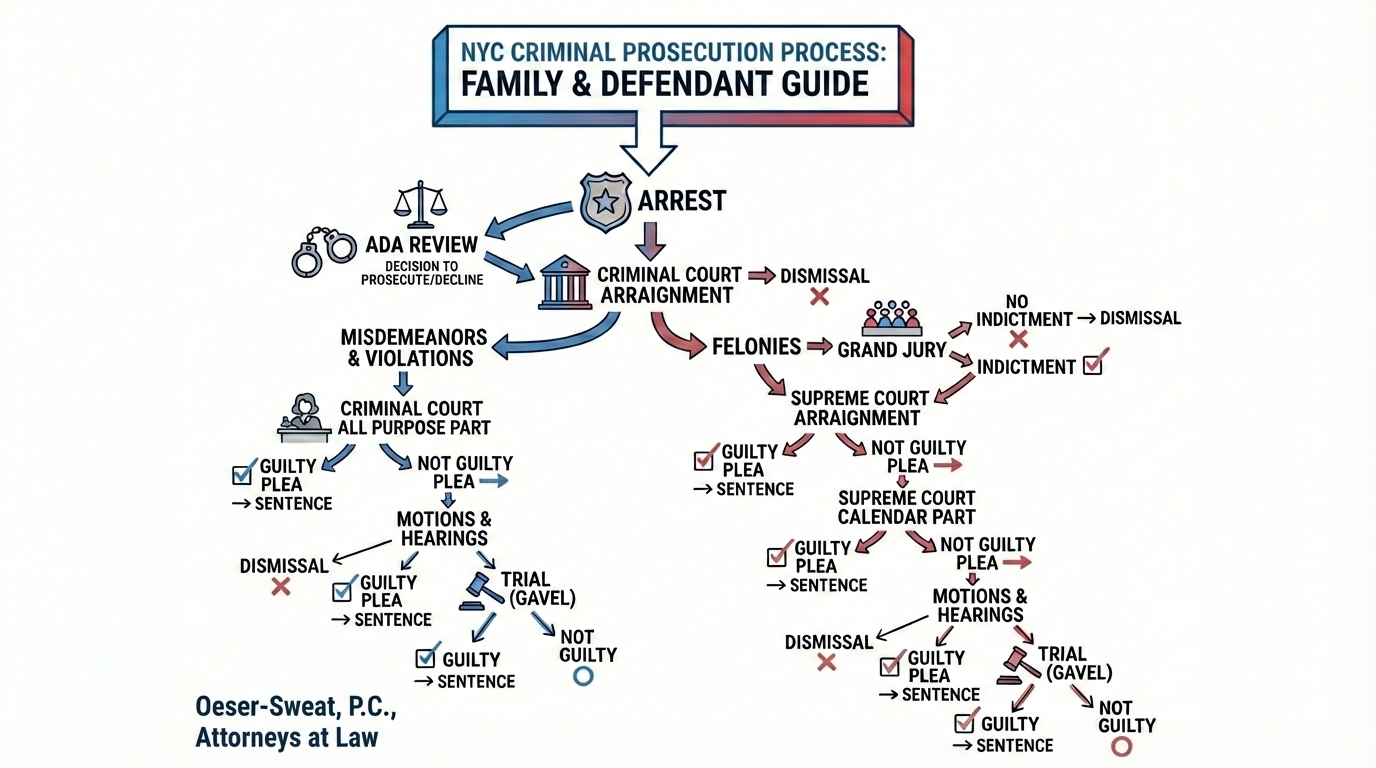
View Text Description of Process Chart
Step 1: Arrest & Processing. The individual is taken into custody, transported to the precinct for fingerprinting, and then to Central Booking.
Step 2: Arraignment. Usually within 24 hours. The accused appears before a judge for the first time. Charges are formally read, and bail or release (ROR) is determined.
Step 3: Grand Jury (Felonies). If charged with a felony, a Grand Jury reviews evidence to determine if an indictment should be issued. This step can often be waived for plea negotiations.
Step 4: Discovery & Pre-Trial. Attorneys exchange evidence (Discovery). Motions are filed to suppress evidence. Plea bargaining negotiations occur actively during this phase.
Step 5: Trial or Disposition. The case resolves either through a guilty plea, a dismissal, or a trial verdict (Guilty/Not Guilty).
Step 6: Sentencing. If convicted, the judge imposes a sentence, which can range from fines or probation to incarceration.
1. The Arrest & Central Booking
After an arrest, the defendant is taken to the local police precinct and then to Central Booking. This is where fingerprints and photographs are taken. The waiting period here can be stressful for families, but legally, the police generally have 24 hours to bring the defendant before a judge.
During this time, the District Attorney’s office is drafting the “Complaint”—the formal document listing the charges. You can sometimes locate a loved one or check their status using Central Booking Info.
2. The Arraignment
The Arraignment is the most critical first step. It is the first time the accused sees a judge and a lawyer. At this hearing:
- The charges are formally read.
- The defendant enters a plea of “Not Guilty.”
- Bail is decided. The judge will either release the defendant on their own recognizance (ROR), set a cash bail/bond amount, or remand them (hold without bail).
For official details on how this hearing works, the NY Courts website provides an excellent guide to arraignments.
3. Grand Jury (Felony Cases)
If the charges are felonies (crimes punishable by more than one year in prison), the case cannot proceed to trial without an Indictment. A Grand Jury of 23 citizens must vote on whether there is enough evidence to charge the defendant. Often, defense attorneys may advise waiving this timeline temporarily to negotiate a better resolution.
4. Discovery and Plea Bargaining
Once the case is in the system, the “Discovery” phase begins. Recent laws in New York require prosecutors to turn over evidence (body cam footage, police reports, witness statements) much faster than before. Defense attorneys use this evidence to negotiate Plea Bargains—agreements to plead guilty to lesser charges in exchange for a lighter sentence—or to prepare for trial.
You can track future court dates and charges using the public WebCrims system.
5. Trial and Sentencing
If no plea agreement is reached, the case goes to Trial. A jury (or judge in a bench trial) determines guilt beyond a reasonable doubt. If found guilty, the case moves to sentencing. If found not guilty, the defendant is released, and the records are typically sealed.